
It’s always a good practice at the end of a project – or after each phase of it – to look back and analyse what went right or wrong, figure out the reasons of each failure and success. It helps finding the path that leaded you where you are and usually reveals hints for the future. Failures are my favorite because are those we are going to remember, no matter what. Changing prospective, failures are just experiments and, as Rob Fitzpatrick wrote, ‘What’s best sometimes is learning, not selling’ (2014). On the other hand, Successes as well can reveal themselves as hidden failures after an accurate analysis. We may assume we succeeded thanks to A whereas it was B the real cause, and this assumption can misguide us planning a strategy for the future.
Thinking about my journey with the MACE and the Designing a Business module I have plenty of material for reflection. Looking back, the Induction Week in September feels like 10 years ago, but it was the first impact with the Design Thinking world.
We had a workshop with Dan Lockton and for the first time someone told us ‘don’t try to convince them, listen to them’; shifting from marketing and selling to understanding and adapting sounded awkward for some of us, coming from a traditional academic business-oriented background. The Human Centred Design Approach was already claiming its first victims. During this workshop we have been asked to look for a problem to solve, to find a question before to propose a solution.
The problem-framing phase is very important in the HCD; it is through user research and observation that we can finally understand what people are trying to do and help them doing it better. Analyzing the touch points in the flow of a specific activity towards a specific aim we can then understand how to change the environment to meet needs; and this includes the interaction with anything, from an Application to a restaurant, from a Customer Service to a garbage bin. The reason why observation is such a relevant tool it that usually people are not fully aware of what is going on, but the help of an external observer is needed to frame the problem.

Getting the rhythm of this workflow allows planning those kind of interventions that can actually change behaviours. Designing interactions, products and experiences for the greater good.
Design Thinking has an intrinsic human-centred nature. It is based on empathy, participation and engagement, tolerance for failure and risk taking (Brown, 2009). It sounds like all the opposite we have been taught so far about serious business, right? In such a process many unpredictable and changeable factors are involved and approaching this method with a traditional management flow can lead to a huge waste of money and time.
So, here come the faithful ‘fail fast, fail cheap’, sometimes followed by ‘succeed sooner’, which is the belief of many startuppers and innovators nowadays. The father of this quote is said to be David Kelley (2013), one of the founder of IDEO.
Then, during a meeting held by the Entrepreneurs Society, here at the Kingston University, David Stokes introduced the Lean Startup Method (Ries, 2011) for us.
Detailed marketing researches and long-term strategies are not made to face the high levels of uncertainty typical of the startup business, not even of the business in general, characterised nowadays by a fast ever-changing world. The Lean Startup method just follows this rhythm proposing a loop:
BUILD – MEASURE – LEARN

In simple words, to build a sustainable business without wasting resources, we should not wait to confront our customers and market but give them the first prototype immediately; look and collect their reactions and feedbacks; analyse and then preserve, adapt or pivot the original idea on the basis of our findings. Do it again and again.
Traditional businesses are asked to call into question their usual approach:
1) Sharing ideas. As David Strokes said ‘Nobody wants your idea, really’. We should overcome the fear of being robbed of our idea, because there is much more to lose from not asking for feedbacks.
2) Stop fearing failure. As previously said, failure is just the outcome of an experiment. It’s validated knowledge (Ries, 2011).
Well, given this disruptive background we entered the most challenging and practical phase of the module: starting our own business.
TEAM UP
After just 2 weeks in the programme we were asked to form teams, picking our companions for the rough path of startupping. Obviously we didn’t know each other, our background, experience level and expertise; to say nothing of attitude and collaborative style. This just happened and now I love those guys, but there is something to be said.
The team is the most important part of any Startup. Give a good idea to a bad team and it will go to waste, give an average idea to a good team and it will become great (Catmull, 2014). I love David Kelley’s (2013) metaphor about teammates: they are like superheroes with peculiar superpowers and kryptonites, their capacities should be complementary to cover the shortages of each other and push to the next level the overall team work. This means that a team, to work properly, has to be diverse but balanced. What if the X-Men were all alike? A bunch of Professor Xs. Who was going to push all those wheelchairs around and penetrate into Magneto’s headquarter?

Nowadays companies know that and it is not unusual so see an application for a job declined not for lack of expertise but because the applicant was not the best fit for the existing team. Most importantly, also investors know that. During the first term we had a panel discussion with two finance experts with extensive experience in funding, angel investors and venture capitalists. One of the first things we heard from them was ‘people buy people’, which means that the first focus of any investor, before even considering investing, is the team. If the team is balance and trust worthy then one can start considering the product itself.
THE IDEA
‘Your business should fit your personality’, this is something else the finance experts told us. It is odd, right? To hear that from ‘serious people’, but it is incredibly true.
After forming teams we had to come up with a business idea, a product quickly implementable in the 6 months we had, and here we faced the first difficulty: not enough constrains. The task was basically: find a problem that could be addressed with a product in any field for any target in the UK (a geographical hint, at least). As Tim Brown said (2009), when the brief is too general the team wander about in the fog. Given that, we brainstormed thinking about the first focus group that came handy: us. We found out that we were all travellers and this leaded to many different ideas: a backpack with integrated push scooter, a wallet with retractable lanyard, a silicon glove to heat up lunch boxes, a diamond shaped tissue dispenser, and many others. So, when we had to present our idea to the rest of the class and work on the business model we were not convinced at all but this is how flI. started taking shape.

BUSINESS MODEL AND CANVASES
During the Designing a Business Module we have been advised on using many different canvases, such as the XPLAIN Empathy Map, the Value Proposition Canvas (Osterwalder, 2014) and the Business Model Canvas (Osterwalder and Pigneur, 2014).


The purpose was clearly building a proper human-centered designed business model. To create our strategy focusing on people an important step to take was creating a Persona, an imaginary individual that would have been our ideal customer. We named him Gregory, a young newly employed designer. Thinking about his habits and daily life we have been able to keep the focus on more properly business oriented details, such as revenue streams and channels of distribution, in a more realistic and insightful way.
MVP
As part of the Lean Startup Method (Ries, 2011) we had to start prototyping our product. I have to say that thinking with our hands has been a pivotal practice throughout this experience. Some of our best breakthroughs, such us the bento bag double function and the use of the earphones, were born from cutting, touching and stitching all together around a table. The Minimum Viable Product – to be used in the MEASURE phase – has just to respond to the main valuable feature for the target customer with the minimum developing effort. Prioritize those features though has been and it is still a big challenge for the team. We had to teach ourselves to think small.
What we also learnt from this experience is that building a Minimum Loveable Product is even more important because it is what will guarantee followers and support to your newborn business, even before anyone can get his hands on the actual product.

STORYTELLING AND PITCHING
Talking about MLP and Persona the Storytelling topic can’t be avoided. We had this amazing workshop with Rob Grundel, professional storyteller, and then I realised how important are stories to facilitate communications and change perceptions. The main differences between animals and human being is that we experience life and transmit knowledge through stories. Whereas the Persona is an insight-based story that we tell to ourselves, the MLP embodies a story about the future of our customers, who they want to be. The shared base of these stories are values to which people can relate, the WHY in the Golden Circle of Simon Sinek (2011) that will lead our audience, through the HOW, to a consistent WHAT.

An important part of our business has been pitching our idea during events and contests and the right structure makes all the difference: backstory, explanation of problems and values, then the struggle to find a resolution and finally our product. This was not just an emotional hook; everything was absolutely true.

FAIRS
‘If you are not embarrassed by the first version of your product, you’ve launched too late’, as Reid Hoffman said, and I have to admit that we were all pretty embarrassed with the first version of flI. Its imperfections were so relevant to us to become almost a certainty of failure. We were completely wrong. We focused our display for both the Fairs on communicating an experience, the story behind the product, and how the potential customers could’ve been part of it.

Just letting them interact with flI. we gathered precious feedback, but what surprised us the most was how people and business mentors appreciated the stage of development. We thought ‘God, we have a chance!’, which in our minds sounded also like ‘God, we have a market!’.

FALSE POSITIVES AND THE WORLD OUT THERE
As Fitzpatrick (2014) keeps repeating in his book about how to talk to customers, when you enter ‘pitching mode’ and people see how passionate you are they tent to say nice things just to be polite. However, after getting plenty of compliments we have to accept the possibility that they may be false positives. We still have to dig deeper into motivations and emotions of our early adopter to learn from them.

What I also deeply understood is that expertise, creative thinking skills and intrinsic motivation in a team are the key to succeed (or at least in trying to). A flat hierarchy where everyone has a say in everything leads to conflict, but also to new thoughtful insights on the way things are or should be done in any field, from development to management.
I also have to say that many established practices still are not fit for this approach. As an example, registering a Patent or a Design is incredibly expensive, how can this work for the Lean Startup that throws its product out in the market just to understand that everything has to be changed? Furthermore, the establishment still sees an overwhelming difference between business oriented and social oriented organisations, as if pursuing needs was something completely disconnected from the market.
I believe these are some of the challenges for Design Thinkers because if something is not working are not users, people or the market to be blamed. It is the Designer to have the responsibility to act for change (Norman, 2013).
—————————————————————-
BROWN, T., 2009. Change by design : how design thinking transforms organizations and inspires innovation. New York: New York : Harper Business.
CATMULL, E., 2014, Creativity, Inc.: Overcoming the Unseen Forces That Stand in the Way of True Inspiration, London : Bantam Press.
AMABILE, T., 1998, How to kill Creativity, Harvard Business Review. Available from: <https://hbr.org/1998/09/how-to-kill-creativity > [20 April 2015].
NORMAN, D.A., 2013. The design of everyday things. Revised and expanded edition.. edn. London : The MIT Press.
FITZPATRICK ROB, 2013. The Mom Test: How to talk to customers & learn if your business is a good idea when everyone is lying to you. CreateSpace Independent Publishing Platform.
OSTERWALDER, A., 2010. Business model generation : a handbook for visionaries, game changers, and challengers. Hoboken, N.J.; Chichester: Hoboken, N.J. : John Wiley & Sons.
RIES, E., 2011. The lean startup : how constant innovation creates radically successful businesses. London: London : Portfolio Penguin.
KELLEY, D., KELLEY, T., 2013, Creative confidence: unleashing the creative potential within us all. London: William Collins.
SINEK, S., 2011, Start With Why: How Great Leaders Inspire Everyone To Take Action, London : Portfolio Penguin.
OSTERWALDER, A., PIGNEUR, Y., 2014,Value Proposition Design: How to Create Products and Services Customers Want, Hoboken : John Wiley & Sons, New Jersey.

 Hilter understood the general discontent in Germany
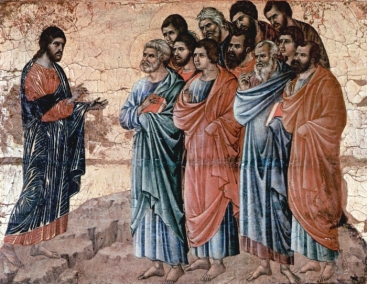 I guess Jesus as an example needs no explanation.
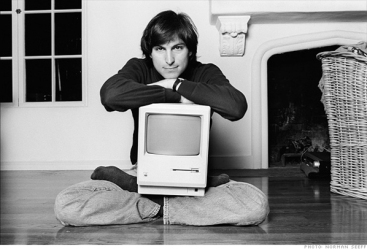 In 2010, a year before his death, Steve Jobs outlined Apple’s strategy
 Richard Branson said ‘In business companies that want to survive
 Mandela spent 27 years in prison to fight apartheid


 thoughtfromthemace