I spent quite a long time asking myself the true meaning of leadership and who is a real leader.
In my experience, people often look at a leader as a ‘one man show’, the Saver and the Shepherd (it is also Easter time so this is the perfect example), someone able to change lives and that worth follow. However, I believe is more complex than that. It has to.

What are the names coming to your mind when thinking about leaders? Jesus, Nelson Mandela, Steve Jobs, Adolf Hitler, Richard Branson? Those are some of mine. As you can tell for yourself none of them is or was perfect, on the contrary some were completely out of control. So, what did make them leaders? I’m pretty sure they are or were not able and excellent in doing everything on their own: organisation, creativity, accounting, PR and HR embodied in an only soul. What I think is that they gave voice to something which was already inside of people’s mind.
They told their audience something they were willing to listen, it was the right moment to shape the right story. People followed, supported and helped because they felt understood by someone with the ability to put their needs and feelings into words.
People have always loved leaders because they are reassuring, they know what has to be done to get to the finish line and – worst scenario – you’ll have someone to blame in the end. However, nowadays being a leader, even in a small company, is getting more and more challenging and it’s not just a personality matter. You have to be BRAVE:
- Environment – Where to play? Understand the context, the emerging trends and dangers. Be always ready.
 Hilter understood the general discontent in Germany
after the WWI and took his chance to rise.
- Values – What matters and why? Be clear about your purpose. Be true to yourself and your tribe.
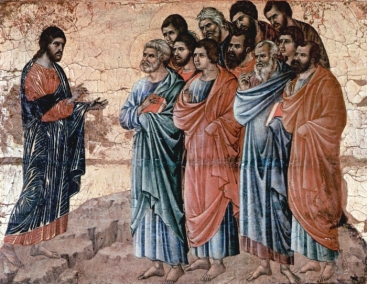 I guess Jesus as an example needs no explanation.
- Attitudes – How to win? You have to built a strategy, make brave choices and act promptly even not in the best condition.
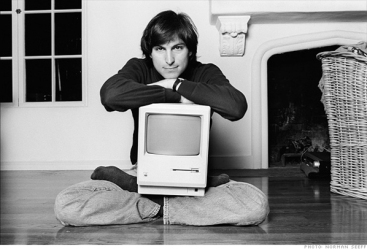 In 2010, a year before his death, Steve Jobs outlined Apple’s strategy
in an email to the company’s 100 most senior employees.
- Relationships – How to connect? Communication is connection. A good leader is also a psychologist and good relationships can’t be imposed.
 Richard Branson said ‘In business companies that want to survive
are smart enough to know that caring and cooperation are key.’
- Behaviors – What impact? Environment, Values, Attitudes and Relationships should be consistently visible in the leader’s behaviour and in those behaviours he/she fosters. This will make an impact.
 Mandela spent 27 years in prison to fight apartheid
and resumed negotiations as soon as he got out.
I don’t like calling ‘followers’ those that are not leaders, it makes me think to brainless sheep that would do whatever the shepherd tells them. On the contrary, a Leader of men gets her/his value from the value of those around him. There is no Leader without Followers and, most importantly, there is no Impact.


 thoughtfromthemace